Starting solids: Top tips on how to transition from milk to solid food
In partnership with Pampers
Making the move from milk to solid foods is an exciting milestone in your baby’s development, but it can also feel like a daunting step for parents.
I’ve spent decades helping families navigate this transition. And as part of my #BabyNutrition series with Pampers, this article gets to the bottom of introducing solid food alongside milk feeds – while Pampers keeps your little one comfy and dry through every messy moment!
Milk feeds are still central to their nutrient intake
Starting solids doesn’t mean that their usual milk will take a back seat. Weaning, also referred to as complementary feeding is exactly this, introducing solid food to complement their usual milk intake. Your baby will still need around 500–700ml of breast milk or formula each day up until their first birthday.
Naturally your baby is likely to drink less milk as they eat more solid foods, and their milk feeds will become less frequent and shorter too. What is important to note here is that, from around 6 months, your baby’s regular milk will no longer provide them with enough of the nutrients they need.
Their stores of critical nutrients such as iron and essential fatty acids start to deplete at around the 6-month mark, so they need nutrients from specific foods to meet the increased demand for these nutrients. And as your baby is rapidly growing at this point, they will also need additional protein and energy in the form of calories from food to provide the building blocks for growth and keep their energy levels up.
How do I combine milk feeds at the start of weaning?
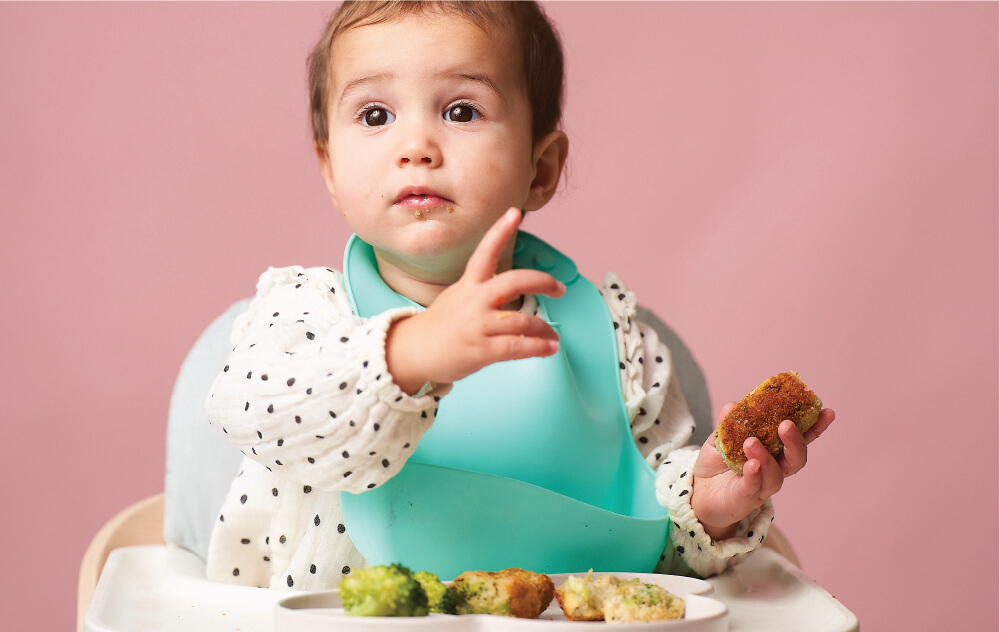
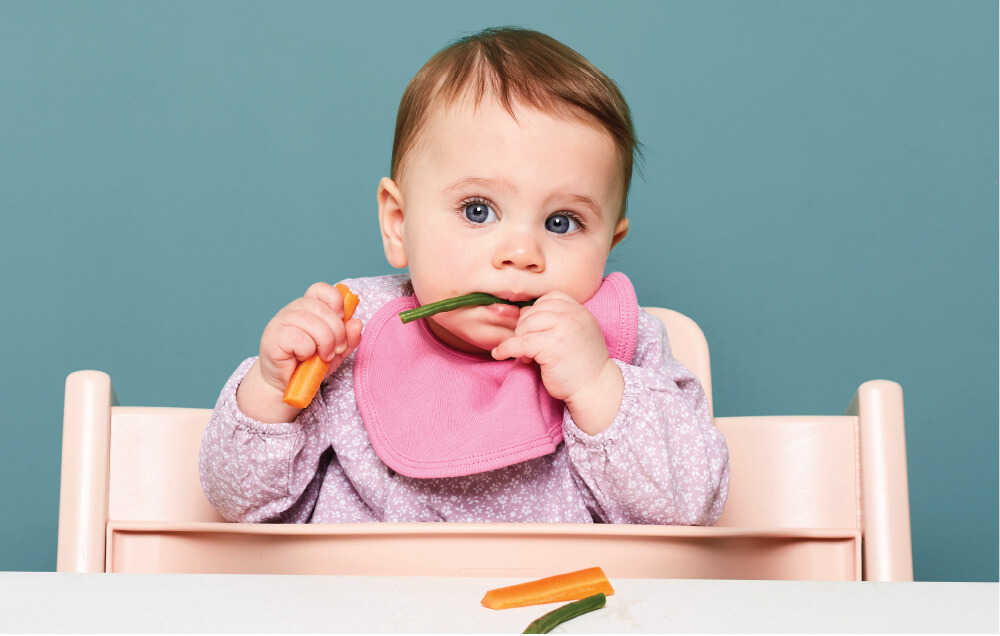
You won’t be substituting a milk feed with food to start with. Your baby will need to get used to the feeling of food in their mouth and learn how to move it around and swallow it. They will only eat very small amounts at first (roughly 2 – 3 spoonfuls of puree or soft finger foods batons).
When starting out, try and keep to your usual milk feeding routine. This stage is very much about introducing a variety of new tastes and textures rather than volume. You’ll gradually build up to more complete nutrient dense meals over the coming weeks and months.
Combining milk feeds
I’ve created a visual planner which will help with how to incorporate milk fees with weaning in the first few weeks. Of course, this is aimed as a rough guide and remember, always follow your baby’s lead.
The idea is that in the first week, you might get to a point where you’re offering solid foods once a day, likely around lunchtime when they are not too hungry or tired. And then in weeks two and three it’s likely you’ll have increased their solids intake to twice a day. Then by week four, your baby may be having three small meals in the form of breakfast, lunch and tea.
Some babies will progress quicker, and some more slowly. Both scenarios are completely fine, and whatever stage you are at your baby will still be having around four milk feeds a day alongside their meals. This might look a little something like this – one at waking then one mid-morning, mid-afternoon and then bedtime.
Should you feed baby solids before or after milk feeds?
I would recommend offering your baby a breastfeed or a little formula before you give them food. By making sure your baby is relaxed, content, and not too hungry, they are more likely to be accepting of exploring new foods.
Their usual milk is still so key at this time as it is far more nutrient-dense than the amount they’ll be taking in through food.
When and how to drop milk feeds?
6 ½ – 7 months
Both breastfed and formula fed babies will gradually start taking less milk as they take on more food. Aim for around 3 small meals a day. You baby is likely to drink less milk as they eat more solid foods, and their milk feeds will naturally become more infrequent and shorter.
Babies need to learn to recognise when they are hungry and full-up, so ensure you are helping to gently reduce their feeds.
7 months
At around 7 months, as a general guideline, your baby is likely to be having 3 – 4 milk feeds per day with their total milk still being at around 600ml. Offer water with meals to quench their thirst.
Your baby is still likely to wake at night for a milk feed, and this is absolutely natural. Try gradually cutting down the amount you give at night and boost the last feed of the evening.
10 months
By 10 months, your baby will only need around 500ml of their usual milk a day. They’ll be taking in an abundance of nutrients, so carry on reducing their milk feeds down to 2 – 3 feeds a day.
At around the 10-month mark, you might start introducing a small healthy snack either mid-morning or mid-afternoon. A regular snack may start to replace those mid-morning and mid-afternoon milk feeds. You’ll want them to be hungry enough for their main meal so be mindful that when I say two small snacks, this is a guide, and some babies will need smaller or fewer snacks than others.
Milk feeds at 12 months
Once your baby has reached their first birthday, you can start to introduce full fat cow’s milk which will provide a good source of bone-boosting calcium, and other essential vitamins and minerals.
If you’re breastfeeding, then it is perfectly fine to continue doing so and the World Health Organisation advise continuing until your baby is two years old in addition to complementary food.
As a guide, your baby should be having no more than 500ml of cow’s milk a day from 12 months, alongside a diet of nutrient dense foods.
Protecting baby's skin during weaning
As babies transition to solids, their digestion changes, often leading to more frequent and varied bowel movements. Pampers Premium Protection Nappies and Harmonie Aqua Baby Wipes help protect healthy skin as little tummies adjusts to new foods.
*Remember to bin your wipes and not to flush them.